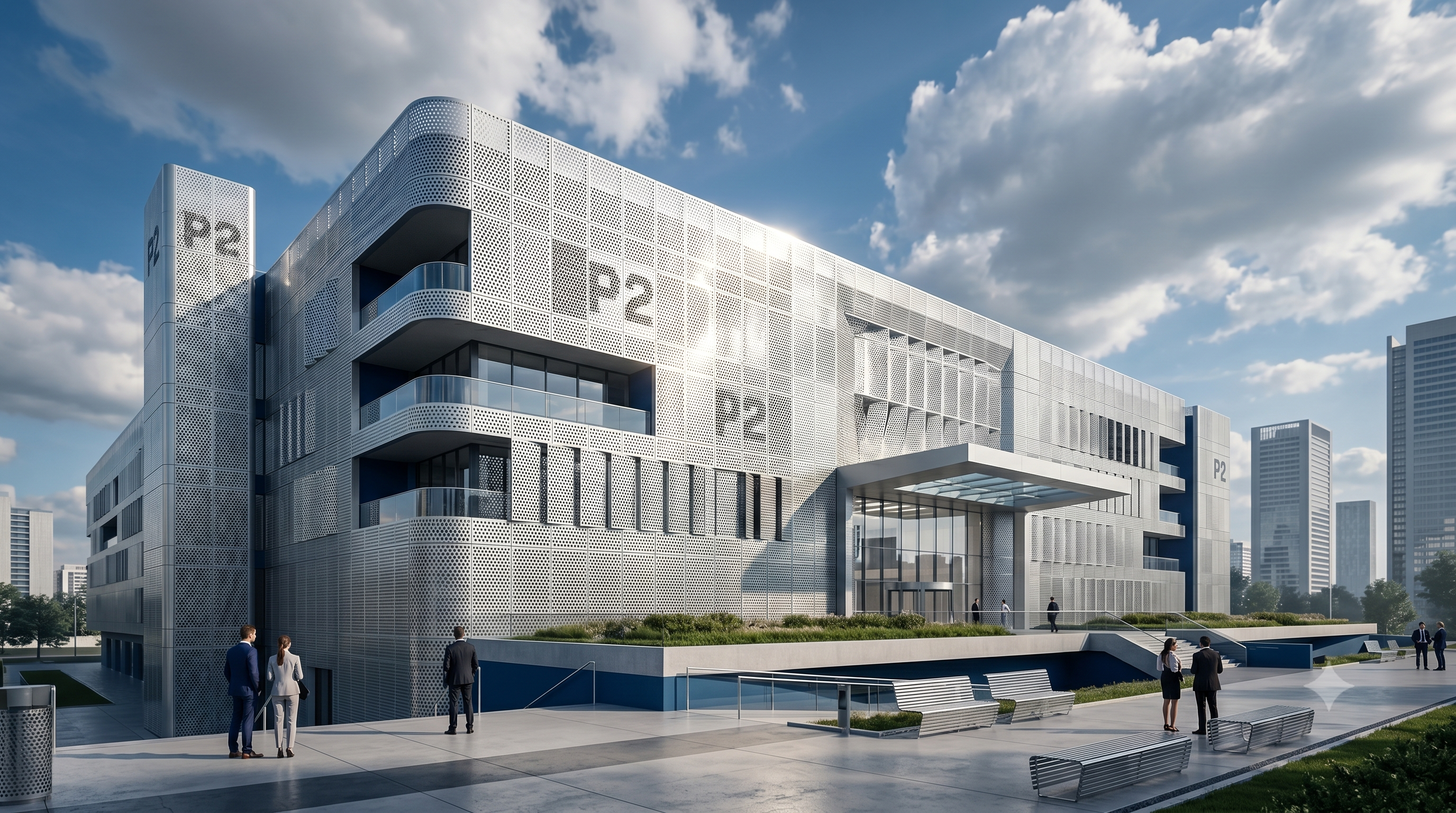
Perforated metal has moved from industrial utility to a defining material in contemporary architecture. In 2026, architects across India and the Gulf are specifying custom perforation patterns not only for aesthetics, but for measurable performance — solar heat gain reduction, acoustic control, and natural ventilation without compromising structural integrity.
At Ashokraj Industries, we see a clear shift toward gradient perforation panels where open area varies across a single facade plane. This technique modulates daylight penetration while maintaining a unified visual identity — a approach used on corporate campuses, metro stations, and premium retail facades.
“The best perforated facades are engineered systems first and decorative surfaces second. Pattern geometry directly controls thermal performance and occupant comfort.”
1. Solar Shading & Energy Performance
Perforated aluminium and stainless steel sunscreens can reduce interior cooling loads by 15–30% when oriented correctly. Hexagonal and staggered round patterns remain the most specified geometries for exterior cladding due to their strength-to-weight ratio and predictable airflow behavior.
2. Acoustic & Interior Applications
Interior ceiling and wall panels with micro-perforations paired with acoustic backing are standard in auditoriums, airport terminals, and corporate boardrooms. NRC-rated panels from our facility are fabricated to ±0.05mm tolerances for seamless grid alignment.
Key 2026 specification trends:
- Anodized and PVDF-coated aluminium for coastal and high-UV environments
- Backlit perforated panels for lobby and retail feature walls
- Parametric hole patterns generated from BIM models
- Dual-layer perforated systems for enhanced sound absorption
Conclusion
Whether you are designing a landmark facade or a functional ventilation screen, material grade, pattern pitch, and finish selection must be resolved early in the design phase. Our engineering team supports architects with open area calculations, sample panels, and custom tooling for project-specific geometries.